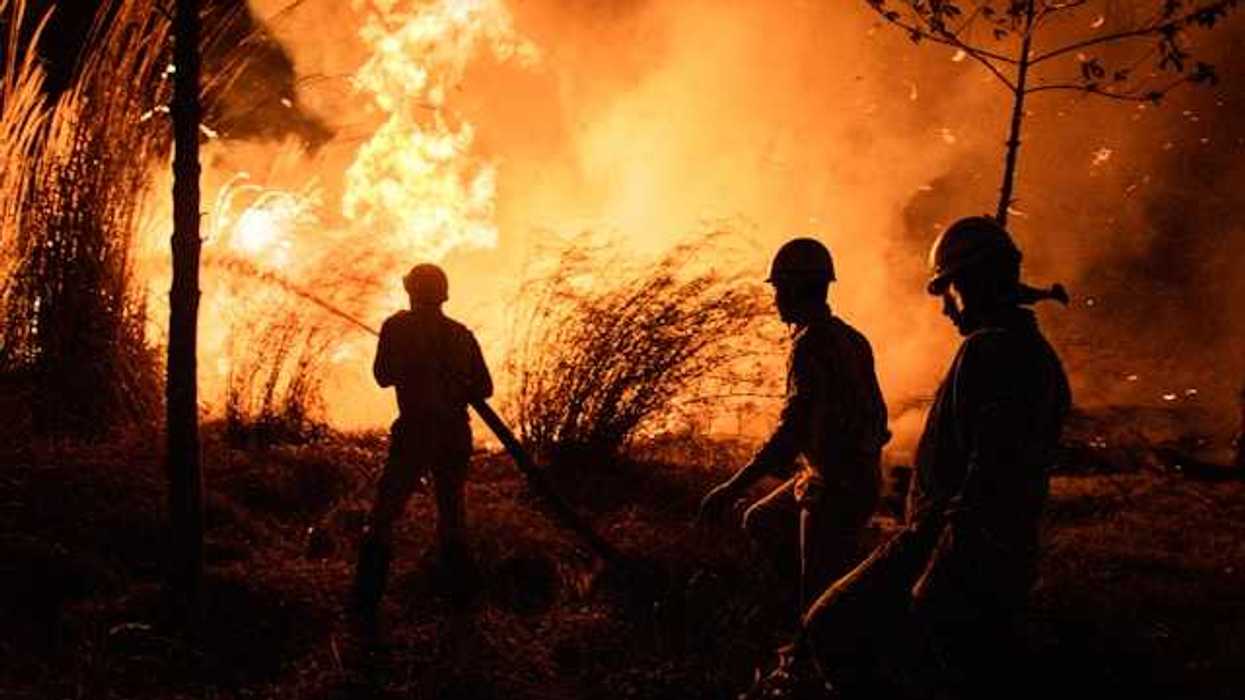
Entire ecosystems in the UK have been scorched and rare wildlife displaced as wildfire callouts jumped more than twelvefold compared to last year.
Nadeem Badshah reports for The Guardian.
In short:
- Wildfires have increased by 1,200% in some UK regions this year, fueled by one of the driest Marches in decades and rising temperatures.
- Fires have ravaged sites of special scientific interest, including Abergwesyn Common in Wales, threatening golden plovers and degrading centuries-old peat bogs.
- Conservation groups and fire chiefs warn that climate change is increasing fire risks and are calling for long-term government action and investment in mitigation efforts.
Key quote:
“Whole ecosystems have been decimated and will remain altered well into the future.”
— Chris Smith, National Trust countryside manager for Mid and South Wales
Why this matters:
Wildfires aren’t just a problem for hot, dry countries. In the UK, blazes are increasingly threatening landscapes that once stayed wet and cool for much of the year, endangering rare and vulnerable wildlife. This shift is part of a broader pattern linked to climate change: As temperatures rise and rainfall patterns shift, peatlands dry out, grasslands become tinder, and ecosystems collapse under the pressure. When fire sweeps through a peat bog, it doesn’t just destroy the surface—it burns deep into the carbon-rich soil, releasing greenhouse gases and turning natural carbon sinks into sources of pollution. Recovery, if it happens, takes decades or more.
Learn more: London's Royal Botanical Gardens faces major tree loss due to climate change