Editors Note: This month Le Monde won the Prix Varenne Presse quotidienne nationale (Varenne Award for the national daily press) for their Monsanto Papers series, an investigation on the worldwide war the Monsanto corporation has started in order to save glyphosate, originally published in June.
Below is part one, originally published June 1, 2017, translated by GM Watch and the Health and Environment Alliance.
"We have been attacked in the past, we have faced smear campaigns, but this time we are the target of an orchestrated campaign of an unseen scale and duration." Christopher Wild's smile quickly faded. Through the window of the high rise where the International Agency for Research on Cancer (IARC) is headquartered, the rooftops of Lyon, France, spread out behind his tall figure.
Christopher Wild is the director of the agency so he weighed every word—speaking with a seriousness appropriate for the situation. For the past two years, a blazing onslaught has targeted the institution he is running: the credibility and integrity of IARC's work are being challenged, its experts are being denigrated and harassed by lawyers, and its finances weakened.
For nearly half a century IARC has been charged, under the auspices of the World Health Organization (WHO), to draw up an inventory of carcinogens. But now the venerable agency is beginning to waver under the assault.
The hostilities were launched on a specific date: March 20, 2015. On that day, IARC announced the conclusions of its "Monograph 112". The findings left the whole world stunned. Unlike the majority of regulatory agencies, IARC declared the most widely used pesticide on the planet to be genotoxic (it causes DNA damage), carcinogenic to animals, and a "probable carcinogen" for humans.
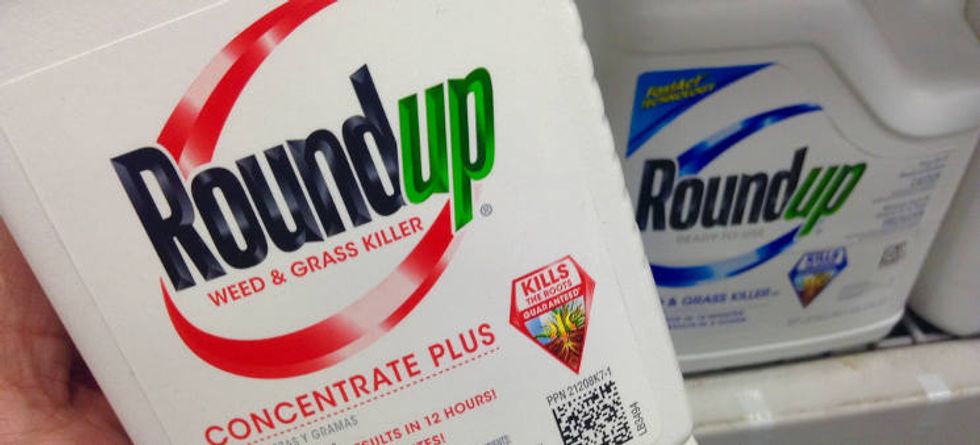
The pesticide is glyphosate, the main component of Roundup, the flagship product of one of the world's most well-known companies: Monsanto. Glyphosate is also the Leviathan of the agrochemical industry. Used for more than 40 years, it is present in no less than 750 products marketed by about 100 companies in more than 130 countries.
Glyphosate, the bedrock of Monsanto
Between 1974, when it was placed on the market, and 2014, the use of glyphosate increased from 3,200 tons to 825,000 tons per year. A dramatic increase that is due to the massive adoption of seeds that are genetically modified to tolerate it – "Roundup Ready" seeds.
Of all the agrochemical companies that could be affected by measures to restrict or ban the product, there is one whose very survival is at stake. Monsanto, which developed glyphosate, has made the chemical the bedrock of its economic model. The company has built its fortune selling Roundup and the seeds that go with it.
So when IARC announced that glyphosate was "probably carcinogenic," the American firm reacted with unprecedented brutality. In a company statement, it vilified IARC's work as "junk science"— a selective "cherry-picking" of data, based on an "agenda-driven bias," all leading to a decision made after only "hours of discussion at a one-week meeting."
Never before had a corporation so crudely challenged the integrity of an agency under the aegis of the United Nations. The battle was launched—the one taking place in the open at least.
A year’s work to evaluate the pesticide
Because in its own offices Monsanto was dancing to a completely different tune. The company knew full well that IARC's evaluation of glyphosate was carried out after a year of work by a group of experts, who then met for several days in Lyon to deliberate. IARC procedures require that the industries affected by the product under review have the right to attend this final meeting.
For the evaluation of glyphosate, Monsanto had sent an "observer," the epidemiologist Tom Sorahan, a professor at the University of Birmingham (UK), whom the company sometimes employs as a consultant. The report he sent to his bosses on March 14, 2015, assured them that everything was done according to the rules.
"I found the Chair, sub-chairs and invited experts to be very friendly and prepared to respond to all comments I made," wrote Mr Sorahan in an email sent to a Monsanto executive. The email appears in the "Monsanto Papers" —a collection of the company's internal documents that a U.S. court started to make public in early 2017 as part of ongoing lawsuits.
"The meeting followed the IARC guidelines," the observer added. "Dr Kurt Straif, Head of the IARC Monographs Programme, has an intimate knowledge of the IARC rules and insists these are followed."
Counter-attack

International Agency for Research on Cancer in Lyon, France. (Credit: Olivier Engel)
The academic scientist, who has not responded to requests from Le Monde, seemed to be very embarrassed by the idea that his name might be associated with Monsanto's response to the IARC decision: "I do not wish to be referenced in any document from your PA/PR people," he wrote, though at the same time proposing that he would be "happy to assist in formulating statements that you may wish to make" in the inevitable counter-attack that the company was putting in place.
A few months later, the non-American scientists who had been members of the IARC panel on glyphosate all received the same letter. Sent by Monsanto's law firm, Hollingsworth, the letter told them to hand over all the files related to their work on "Monograph 112."
Drafts, comments, data tables ... everything that had gone through the IARC computer system. "If you decline to provide the files," the lawyers warned, "we request and instruct you to immediately take all reasonable steps in your power to preserve all such files intact pending formal discovery requests issued via a US Court."
"I found your letter intimidating and noxious," said one of the scientists in his reply dated November 4, 2016. "I find your approach reprehensive and lacking in common courtesy even by today's standards."
Pathologist Consolato Maria Sergi, a professor at the University of Alberta in Canada continued: "I consider your letter pernicious because it maliciously seeks to instill some anxiety and apprehension in an independent group of experts."
Lettre de Hollingsworth à Consolato Maria Sergi by LeMonde.fr on Scribd
Intimidating maneuvers
U.S. members of the IARC working group are being subjected to even more "intimidating" measures. In the U.S., the Freedom of Information Act, or FOIA, allows every citizen—under certain conditions—to request access to documents produced by public bodies and their officials: memos, emails, internal reports, etc.
According to our information, since November 2015 the law firms Hollingsworth and Sidley Austin have filed five applications to the National Institutes of Health (NIH) alone where two of the group experts are employed.
Applications on other scientists have also been made to the California Environmental Protection Agency (CalEPA), Texas A&M University and Mississippi State University.
Some of these institutions have even been subpoenaed by Monsanto lawyers as part of ongoing glyphosate litigations – and therefore obliged to hand over some of their internal documents.
Is the aim of these intimidating maneuvers to silence criticism? World-renowned scientists who are usually open to media requests did not respond to Le Monde's requests—even for interviews off the record. Some did agree to speak but only from a private line outside office hours.
Members of the U.S. Congress do not need to use FOIA to be able to hold federal scientific institutions accountable. Republican Jason Chaffetz, former member of the House of Representatives and former chair of the House Oversight & Government Reform Committee, wrote to Francis Collins, the director of NIH, on September 26, 2016.
IARC's decisions have "generated much controversy and alarm," he wrote. And despite its "record of controversy, retractions, and inconsistencies," IARC receives "substantial taxpayer funding" from the NIH.
In fact, 1.2 million euros out of IARC's 40 million euros annual budget comes from a NIH grant. For this reason Jason Chaffetz asked the NIH director for details and justifications of all NIH expenditure related to IARC.
Characters that are almost out of a John Le Carré novel
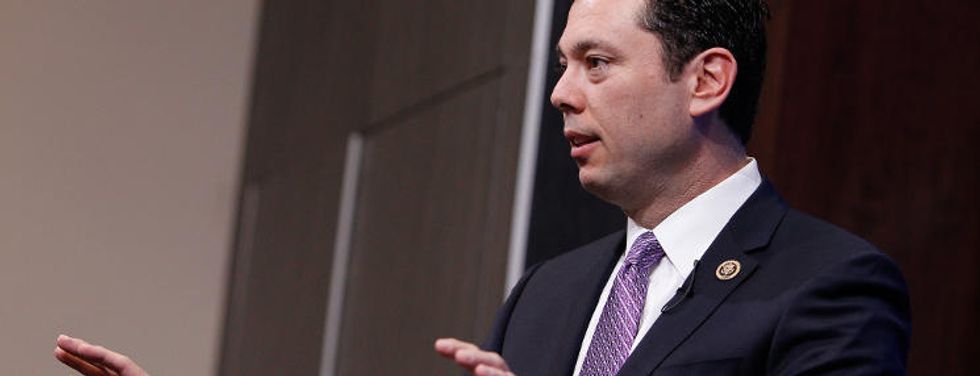
Republican Jason Chaffetz, former member of the House of Representatives and former chair of the House Oversight & Government Reform Committee. (Credit: Brookings Institution)
The same day, the Chaffetz letter was applauded by the American Chemistry Council (ACC). As the U.S. chemical industry's powerful lobbying organization, of which Monsanto is a member, they "hope that it will shed light on the close and somewhat opaque relationship" between the IARC and American scientific institutions.
The chemical lobby had found a valuable ally in Mr. Chaffetz. In March, the former congressman wrote to the head of another federal research organization – the National Institute of Environmental Health Sciences (NIEHS) – to ask her to account for the research that the institution has funded on the harmful effects of bisphenol A, a compound widely used in some plastics.
What better way to neutralize an institution than to cut off its funding? In the months following the publication of "Monograph 112," CropLife International, the organization that defends the interests of pesticide and seed companies around the world, approached some representatives of the 25 member states of IARC's governing council to complain about the quality of the agency's work.
Known as "Participating States," they contribute about 70 percent of IARC's total budget. According to IARC, at least three of them—Canada, the Netherlands and Australia—were approached. None of them replied to Le Monde's requests.
Throughout 2016, characters who seemed to be almost out of a John Le Carré novel made their appearances in the glyphosate saga. In June, someone who presented himself as a journalist but did not announce or register himself as such attended the conference organized by IARC in Lyon for its fiftieth anniversary.
The strange Mr. Watts
Prowling among scientists and international civil servants, the man was seeking details about the functioning of IARC, its funding, its monograph program, and so on.
A few months later, at the end of October 2016, the man reappeared—this time at the annual conference of the Ramazzini Institute, a renowned and respected cancer research organization based near Bologna, Italy. Why on Earth the Ramazzini? Perhaps because the Italian institute had announced a few months earlier that it was going to conduct its own carcinogenicity study on glyphosate.
Related: Of mice, Monsanto and a mysterious tumor
Christopher Watts – that's the man's name – asked questions about the independence of the institute and its funding sources. Because he used an e-mail address that ended "@economist.com," those he approached did not question his affiliation to the prestigious British weekly, The Economist. To the scientists who did ask for details, he said he worked for the Economist Intelligence Unit (EIU), a consultancy which is a subsidiary of the British press group.
The EIU confirmed that Mr. Watts had indeed produced several reports for them but was "unable to confirm in what capacity he attended" the two conferences. "During that time, he was working on a story for The Economist, which ultimately was not published." Oddly enough, the weekly's newsroom replied "there's no one of that name on our staff."
The only thing that seems clear is the name of a company that Mr. Watts created at the end of 2014: Corporate Intelligence Advisory Company. According to the administrative documents, the personal address of Mr. Watts is located in Albania. He did not wish to answer questions from Le Monde.
Intrusive and bureaucratic guerrilla warfare
Within the space of a few months, at least five individuals presented themselves as a journalist, independent researcher or assistant in law firms to approach IARC scientists and researchers involved in IARC's work. All were seeking very specific information about the agency's procedures and funding.
One of them, Miguel Santos-Neves, works for a New York-based economic intelligence company called Ergo. According to a report in the New York Times in July 2016, he was collared during a U.S. judicial investigation for misrepresenting his identity.
On behalf of Uber, Mr. Santos-Neves had investigated a plaintiff who had filed a class-action suit against the company and questioned his professional entourage under false pretenses. Ergo did not respond to Le Monde's enquiries.
Just like Christopher Watts, two sister organizations with nefarious reputations are interested not only in IARC but also in the Ramazzini Institute. The Energy and Environmental Legal Institute (E&E Legal) introduces itself as a non-profit organization, the missions of which include to "hold accountable those who seek excessive and destructive government regulation that's based on agenda-driven policy making, junk science, and hysteria."
The Free Market Environmental Law Clinic, for its part, says "it seeks to provide a counter-weight to the litigious environmental movement that fosters an economically destructive regulatory regime in the United States."
According to Le Monde, they have initiated no fewer than 17 FOIA requests to the NIH and the U.S. Environmental Protection Agency (EPA).
Engaged in legal, bureaucratic and intrusive guerrilla warfare, they have demanded the correspondence of several American officials "containing the terms 'IARC', 'glyphosate', 'Guyton'" (Kathryn Guyton is the IARC scientist responsible for the "Monograph 112").
They seek the smallest of details on scholarships, grants and other financial and non-financial relationships between these American agencies, IARC, some scientists, and the Ramazzini Institute.
"Let nothing go"
(Credit: Mike Mozart/flickr)
The two organizations are headed by David Schnare, a confirmed climate sceptic who is known for harassing climate scientists. In November 2016, Mr. Schnare temporarily left E&E Legal to join Donald Trump's transition team.
As for Steve Milloy, who is also among the leaders of the organization, he is a well-known figure in the small world of tobacco industry-funded propaganda. When asked about their motivations and sources of funding, the president of E&E Legal replied by email: "Hi, we're not interested in participating."
The attention on these FOIA requests is amplified by op-eds published in some media outlets.
One of them, The Hill, is mandatory reading for every political player in Washington DC. Their authors are a squadron of propagandists that the association US Right to Know (USRTK) has documented as having longstanding ties to agrochemical companies and conservative think tanks, such as the Heartland Institute or the George C. Marshall Institute, both known for their major role in the manufacture of climate skepticism.
Their writings expose exactly the same arguments. And sometimes even the same phrases: the "shoddy science" of an IARC ravaged by conflicts of interest and "widely criticized"—yet without ever saying by whom.
The lawyers involved in U.S. lawsuits revealed that Monsanto also used more discreet means. Responding under oath to questions from lawyers representing people who attribute their cancer to Roundup, the firm's executives revealed a confidential program aimed at countering all criticisms and called "Let Nothing Go."
The transcripts of these hearings remain confidential. But memos from the law firms involved allow a little more to be known. They show that Monsanto uses third-party companies that "employ individuals who appear to have no connection to the industry but who in turn post positive comments on news articles and Facebook posts, defending Monsanto, its chemicals, and GMOs."
The machine seems to be racing ahead with the advent of Mr. Trump
In recent months, the coalition against IARC has grown. At the end of January 2017, a few days after the inauguration of Donald Trump at the White House, the American Chemistry Council joined its ranks.
The U.S. chemical lobby has opened a new front on social networks in the form of a "Campaign for Accuracy in Public Health Research," with a dedicated website and a Twitter account.
Its stated purpose is to obtain a "reform" of the IARC monograph program. The powerful lobbying organization has put aside the kid gloves: "A side of bacon or a side of plutonium? It's all the same according to IARC."
The tweet goes with a photomontage showing two fluorescent green bars dipping into bacon and eggs on a plate.
In October 2015, IARC indeed classified processed meats as "carcinogenic" and red meat as a "probable carcinogen" like glyphosate.
Perhaps having privileged access to President Trump's closest circle provides a feeling of omnipotence to these chemical and agrochemical industries? The chief American lobbyist of the American Chemistry Council, Nancy Beck, taken over as Deputy Assistant Administrator at the Office of Chemical Safety and Pollution Prevention of the U.S. EPA, the very agency that oversees the re-examination of the glyphosate file.
And was not Andrew Liveris, the boss of Dow Chemical, a member of the American Chemistry Council, entrusted by Donald Trump in person to lead the president's "Manufacturing Jobs Initiative"?
The machine seems to be racing ahead with the advent of the Trump era.
At the end of March, the Republican Texan Lamar Smith, chair of the House Committee on Science, Space and Technology, addressed the now former Secretary of Health and Human Services, Tom Price. Smith focused his demands on the financial links between the National Institute of Environmental Health Sciences (NIEHS) and the Ramazzini Institute in order, he wrote, to "ensure that grant recipients adhere to the highest standards of scientific integrity".
Ignorance and lies
That is all it took for this congressman's request to become, in the writings of two propagandists called Julie Kelly and Jeff Stier, a "Congress's investigation" into the "obscure organisation" that is the Ramazzini Institute.
Published shortly afterwards in the National Review, their article attacked personally both the director of NIEHS Linda Birnbaum, accused of promoting a "chemophobic agenda," and her former Associate Director, Christopher Portier, who accompanied IARC's work as an "invited specialist," described as a "well-known anti-glyphosate activist." Both were described as "Ramazzini fellows".
According to Kelly and Stier, this is another example of "how science has been politicized." The story was also taken up by others, including Breitbart News, the far-right website co-founded by Steve Bannon, the former White House Chief Strategist.
To describe the Institute or Collegium Ramazzini (the two are confused in the articles) as an "obscure organization" here, or as a "kind of Rotary Club for activist scientists" elsewhere, is at best ignorance and at worst a lie. Founded in 1982 by Irving Selikoff and Cesare Maltoni, two leading figures in public health, the Collegium Ramazzini is an academy of 180 scientists specializing in environmental and occupational health.
Linda Birnbaum and Christopher Portier are "Fellows" of the Collegium. And so are the Head of the IARC Monographs Program Kurt Straif, and four other experts from the Monograph 112 working group, all top-flight scientists in their respective fields.
"We are not afraid"
The launch of a long-term toxicology study on glyphosate by the Ramazzini Institute in May 2016 has made a target of an organization renowned for its expertise in cancer. The Head of the Research Department of the institute, Fiorella Belpoggi, is one of the few scientists who agreed to speak to Le Monde: "We are few, we have no money, we are just good scientists and we are not afraid."
The attacks on the Ramazzini and the IARC are very unlikely to stop. After glyphosate, other strategic chemicals are on IARC's list of "priorities" for the period 2014–2019. These include more pesticides and also bisphenol A (BPA) and aspartame.
The NIEHS happens to be one of the world's leading funders of research on the toxicity of BPA. As for aspartame, the study that alerted the world to the carcinogenic properties of this sweetener was carried out several years ago... by the Ramazzini Institute.
"I hadn't realized we were so important before this," whispered Fiorella Belpoggi, "but if you get rid of IARC, NIEHS and the Ramazzini Institute, you get rid of three symbols of independence in science."
A type of science that has become a threat to economic interests worth hundreds of billions of euros.
Tomorrow: Part 2 — Reaping a bitter harvest
- Editorial: SUNY-Albany must stop doing Monsanto's work - EHN ›
- Glyphosate cancer findings of “extreme concern” as Europe weighs reauthorization of pesticide - EHN ›