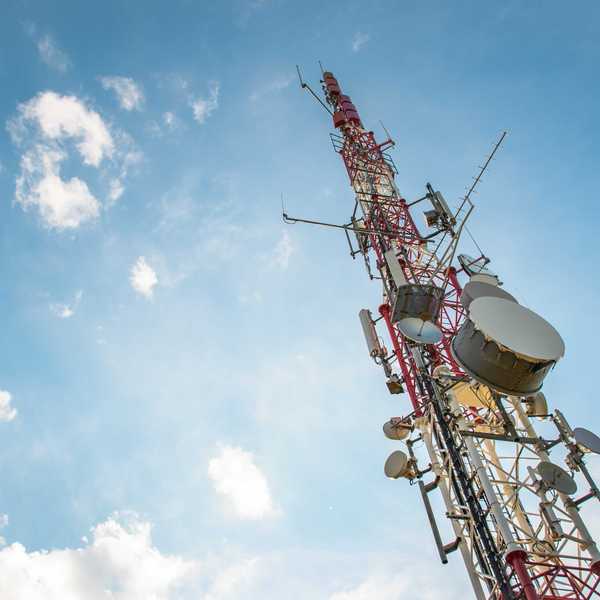
A new peer-reviewed paper published in Environmental Health analyzed data from major research studies using procedures developed by the U.S. Environmental Protection Agency (EPA) and found that current human exposure limits for the wireless radiofrequency (RF) radiation emitted from cell phones, cell towers, and wireless devices “fail” to protect public health. The researchers concluded the limits needed to be strengthened by at least 200 times after they analyzed the animal cancer findings of the $30 million U.S. National Toxicology Program (NTP) study to determine the dose of wireless radiation associated with an excess cancer risk of one per 100,000, a level typically used by the EPA to determine safety limits for environmental hazards.
This risk assessment analysis was conducted by scientists Dr. Ronald L. Melnick, a retired 28 year toxicologist from the National Institute of Environmental Health Sciences, and Dr. Joel M. Moskowitz, School of Public Health at the University of California, Berkeley on behalf of the International Commission on the Biological Effects of Electromagnetic Fields (ICBE-EMF) after recent systematic reviews commissioned by the World Health Organization concluded with “high certainty” that wireless RF radiation exposure caused cancer in animals. They compared the levels calculated in these studies against the human exposure limits for wireless RF radiation exposure set by the U.S. Federal Communications Commission (FCC) and the International Commission on Non-Ionizing Radiation Protection (ICNIRP), which are used by many countries.
In short:
- In order to maintain a cancer risk of one per 100,000, existing limits for 8 hours of RF exposure a day need to be reduced by at least 200 times based on analysis of the NTP study
- An addendum states that when data from animal studies conducted by the Italian Ramazzini Institute was evaluated, the limit for ambient cell tower radiation needed to be reduced by 4,200 times.
- Limits would need to be reduced by 8- to 24-times in order to be protective of fertility, based on data from a WHO-commissioned review of male reproductive outcomes such as decreased sperm count, vitality, and testosterone levels.
- Workers face greater unmitigated risk because current occupational exposure limits allow five times greater exposure.
- The authors urge governments to launch an immediate, independent re-evaluation of wireless radiation exposure limits by applying these rigorous, health-protective methodologies commonly used for toxic and carcinogenic environmental agents.
- YouTube youtu.be
Key Quote:
“Our analysis clearly demonstrates that the current limits for cell phones and wireless networks are structurally incapable of protecting human health. We urgently need governments to step up, abandon these obsolete guidelines, and conduct rigorous risk assessments using modern toxicological data. The science is there; now we need the policy to catch up so we can protect public and occupational health.”
- Dr. Ronald L. Melnick, via the International Commission on the Biological Effects of Electromagnetic Fields' accompanying press release
Why this matters:
Wireless radiation exposure is increasing due to the rapid expansion of cell towers, 5G, and now 6G networks. In 2011, the World Health Organization's International Agency for Research on Cancer (IARC) classified RF radiation as possibly carcinogenic to humans, based largely on studies linking cell phone use to tumors. Despite this and numerous publications documenting adverse effects, the U.S. FCC and ICNIRP maintain limits for human exposure to wireless radiation that are designed only to protect against effects from short-term, high-intensity heating exposures but not from long-term exposure. Numerous independent scientists conclude that decades of research into the health risks of cell phones, cell towers, 4G, 5G, smart meters, and Wi-Fi indicate adverse biological effects can occur at levels compliant with government limits.
What you can do:
- Learn more about how expert scientists and doctors recommend reducing exposure to wireless radiation.
- Use EHS action tools to contact your local, state, and federal representatives to share this information and request a formal re-evaluation of wireless radiation exposure limits as well as more protective policy.
- Learn practical ways to reduce your personal exposure to cell phone and wireless radiation on the Environmental Health Sciences website, and share our fact sheets and infographics posted on our Wireless Resources page.
Related EHN coverage:
- Major WHO-backed study: high certainty that wireless radiation causes cancer in animals
- U.S. cell tower & cell phone radiation policy fails public health, new paper finds
Melnick, R. & Moskowitz, J. (2026). Exposure limits to radiofrequency EMF do not account for cancer risk or reproductive toxicity assessed from data in experimental animals. Environmental Health.
- Opinion: Rising cancer rates in young adults point to diet and environmental risks ›
- LISTEN: Fighting "A New War on Cancer" - EHN ›