
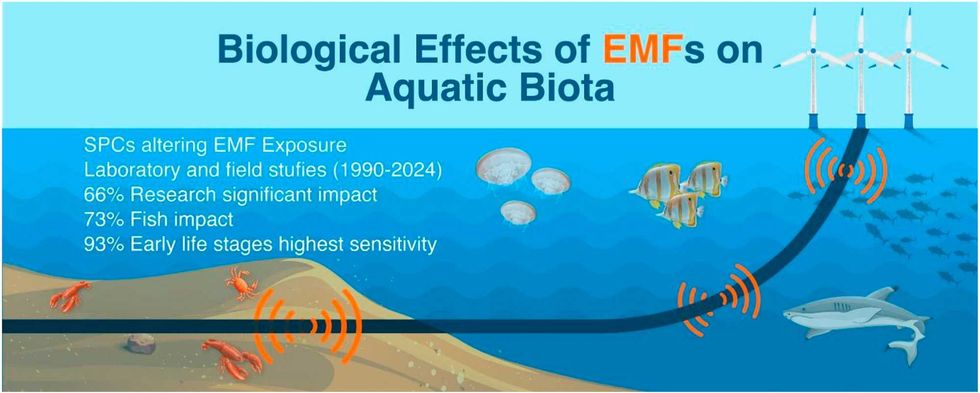
A recent systematic review published in Marine Environmental Research by Elizabeth James et al. examined 35 years of peer-reviewed studies on underwater electromagnetic (EMF) radiation exposure and found that 66% reported significant impacts on aquatic life.
In short:
- Impacts were found in a wide range of species across the full spectrum of EMF levels tested, including levels of environmental exposures comparable to those emitted by submarine power cables.
- Researchers observed both behavioral changes (such as changes to swimming speed and habitat use) and physiological changes (including altered immune responses, metabolic regulation, and cardiovascular development).
- Impacts tied to EMF exposure were most significant during the early stages of development (embryos, larvae, and juveniles), with significant changes reported in 93% of young fish and 100% of young crustaceans.
Key quote:
“Integrating EMF considerations into marine spatial planning, environmental regulation, and biodiversity conservation frameworks will be essential to support proportionate ecological risk assessment.”
 James, E. et al. (2026). Electromagnetic fields from submarine power cables: A 35 Year synthesis of effects on aquatic biota. Marine Environmental Research. Marine Environmental Research
Why this matters:
Environmental exposure to non-ionizing electromagnetic fields (EMF) is rapidly increasing with the expansion of cell towers, 5G, and other modern technologies, resulting in elevated chronic, low-level exposure for wildlife without adequate ecological evaluation. A major global buildout of submarine power cables to support offshore wind and rising electricity demand, especially from AI data centers, is further increasing EMF sources in marine ecosystems. Substantial research has documented adverse impacts from EMF exposure in animals, trees, and plants, and yet there are no regulations in place worldwide to protect them.
What you can do:
Experts are calling on the U.S. government to address environmental impacts as a critical regulatory gap. The U.S. does not have safety standards for EMFs emitted by power lines and electrical grid infrastructure for humans, much less for animals. Studies have found pollinators such as bees are especially at risk. This paper outlines key recommendations for marine environmental protection, including improved exposure assessment, standardized monitoring, incorporation of EMF emissions into environmental impact reviews, life-stage and sex-specific research requirements, and integration of EMF considerations into marine planning and biodiversity policy. Educating policymakers about this regulatory gap is essential to ensure that expanding modern technology does not outpace science-based environmental protections for both people and wildlife.
Related EHN coverage:
- U.S. regulations fail to protect wildlife from cell tower and wireless radiation, policy review finds
- New study shows insects highly absorb 5G frequencies
More resources:
- The Science on Wildlife and Wireless Radiation
- The Health Effects of EMF, ELF and Magnetic Fields from Power Lines and Electricity
James, E. et al. (2026). Electromagnetic fields from submarine power cables: A 35 Year synthesis of effects on aquatic biota. Marine Environmental Research. Marine Environmental Research
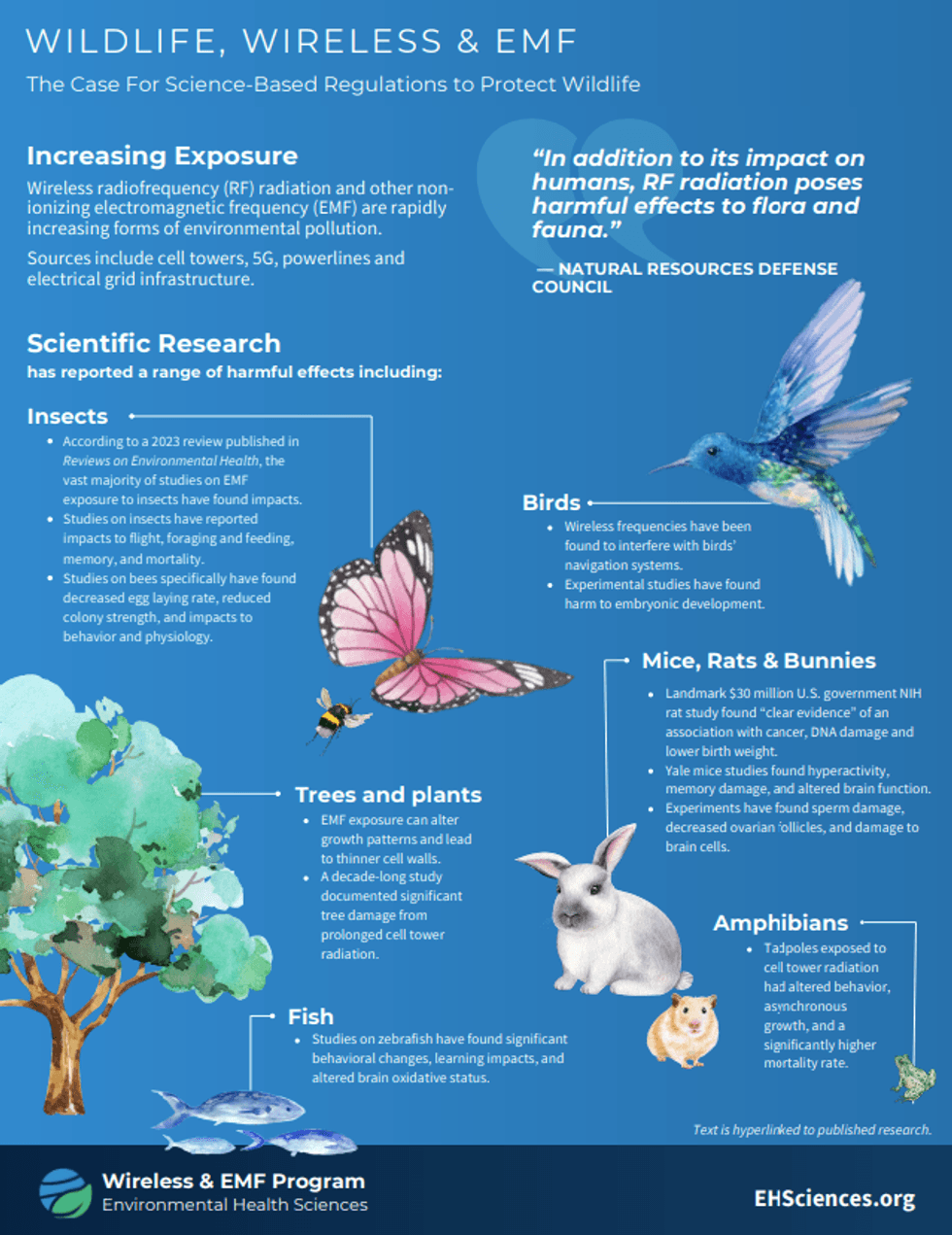 See the full fact sheet: https://ehsciences.org/wp-content/uploads/2025/12/Wildlife-Wireless-Fact-Sheet.pdf
- Op-ed: Time to take action to protect people from PFAS contaminated fish ›
- Pesticide pollution is altering how fish behave in freshwater and ocean ecosystems ›
- Migratory freshwater fish populations see drastic decline since 1970 ›
- Chemical contaminants in U.S. freshwater fish exceed pollution standards despite regulations ›