

A new study published by Zhang et al. in ACS Nano reported on an experiment that exposed mice to both the magnetic fields emitted by Bluetooth earbuds and cell phones, as well as magnetite nanoparticles derived from air pollution. The researchers found that this combined exposure led to greater accumulation of nanoparticles in the brain and neurotoxic effects.
To model real-world exposure, the researchers first disassembled earbuds and cell phone components to measure their magnetic fields, a type of non-ionizing electromagnetic field (EMF). They then replicated those fields in experiments where mice were exposed to the magnetic fields in combination with inhaled magnetite nanoparticles, tiny iron-containing particles commonly found in air pollution from sources such as vehicle exhaust and industrial emissions.
In short:
- The combined exposure increased accumulation of magnetite nanoparticles in the brain by over fivefold.
- Exposed mice showed impaired spatial learning and memory deficits.
- In behavioral tests such as the Morris water maze, exposed mice were less successful and took longer to locate the target platform, indicating reduced cognitive performance.
- The researchers also observed significant changes in gene expression and cellular pathways in the brain associated with neurodegeneration.
Why this matters:
In today's world, people are simultaneously exposed to multiple environmental hazards, from air pollution and forever chemicals to non-ionizing electromagnetic fields (EMFs). Modern electronics emit several forms of EMFs at the same time, including static magnetic fields from internal magnets, radiofrequency (RF) radiation from wireless antennas, and extremely low-frequency fields (ELFs) from the electrical components.
Bluetooth earbuds and cell phones are used near the head for extended periods daily, yet neither these devices nor other wireless technologies are required to undergo pre-market safety testing. This animal study raises questions about how interactions between the device-generated magnetic fields and pollution particles could affect human health. A 2025 Yale study found that RF radiation at levels comparable to exposures from Bluetooth earbuds disrupted brain cell development and increased expression of genes associated with autism in laboratory models.
There is a growing body of evidence that non-ionizing EMFs can act synergistically with other toxic exposures, heightening their harmful effects. For example, carbon black, a toxic component of air pollution, was found to prolong inflammation, alter immune responses, and increase cell toxicity when paired with Wi-Fi signals. The effects of the pesticide atrazine, a known endocrine disruptor, were enhanced by powerline EMF. Studies report that children exposed to both lead and wireless radiation show higher ADHD symptoms and greater neurobehavioral effects compared to lead exposure alone.
“Governments should require rigorous premarket safety testing for new wireless technologies, along with ongoing medical surveillance and full public transparency for consumers about EMF emissions. Current gaps in U.S. regulations leave the public, especially children, without adequate safeguards,” said Theodora Scarato, Director of the Wireless and EMF Program at Environmental Health Sciences, whose recent policy review summarized key policy recommendations to better protect public health.
What you can do:
Numerous experts and medical groups recommend reducing EMF exposure.
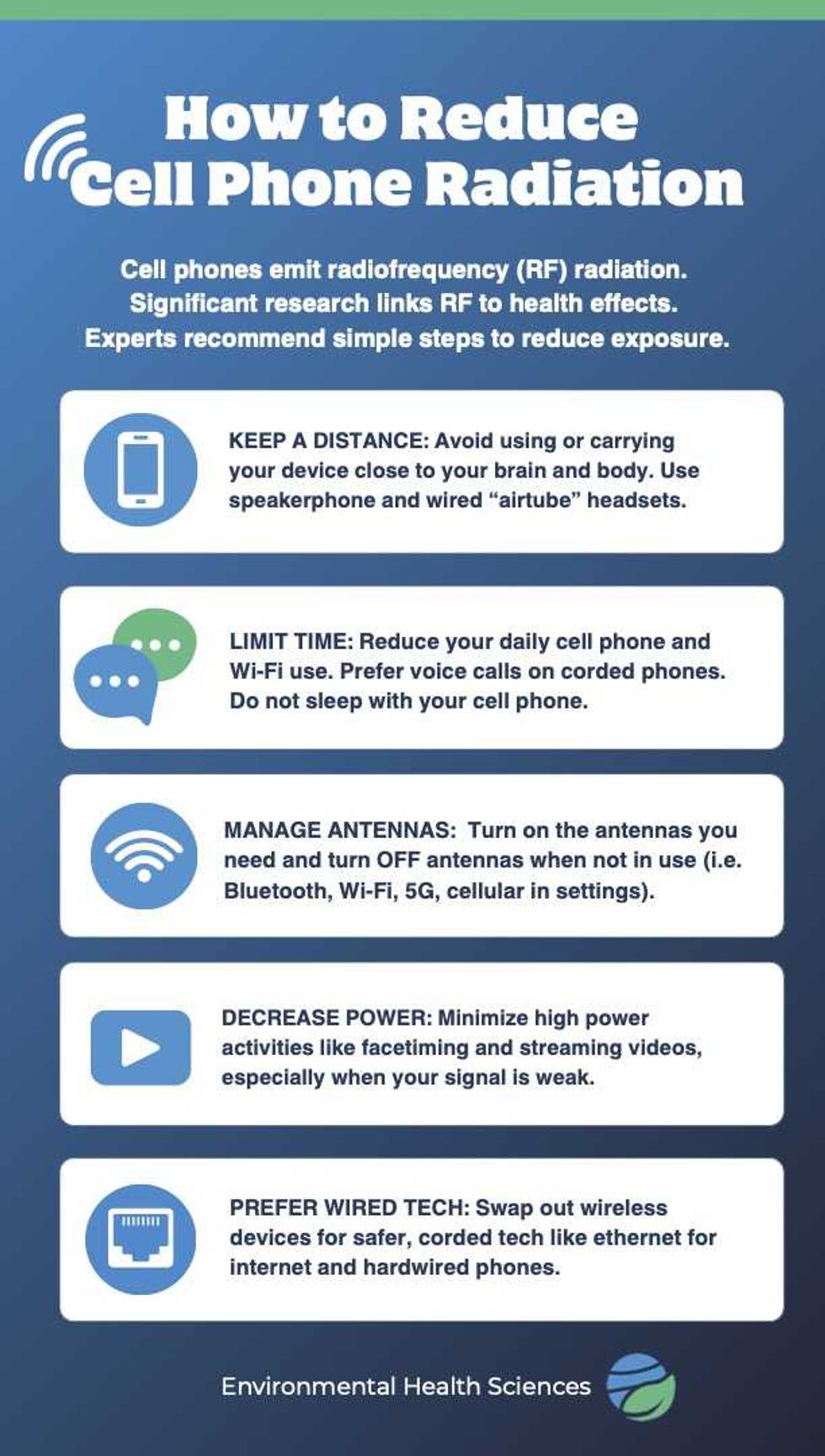
- Use speakerphone or wired (airtube) headphones and headsets instead of Bluetooth earbuds, and do not carry phones close to the body or in the pocket.
- Reduce EMF exposure at home: Hardwire your tech and learn how to create a low EMF sleep sanctuary. Learn more here.
- Share this information. Talk to your community and elected officials. Download our factsheets on science and policy here. Share expert medical and scientific recommendations.
Related EHN coverage:
- Yale Study: Wireless radiation increased the expression of autism-related genes in laboratory models
- Cell phone radiation altered brain development in rodents, study finds
- Wi-Fi laptop use in classrooms increases children’s exposure to wireless radiation, study finds
More resources:
 See more resources at EHSciences.org