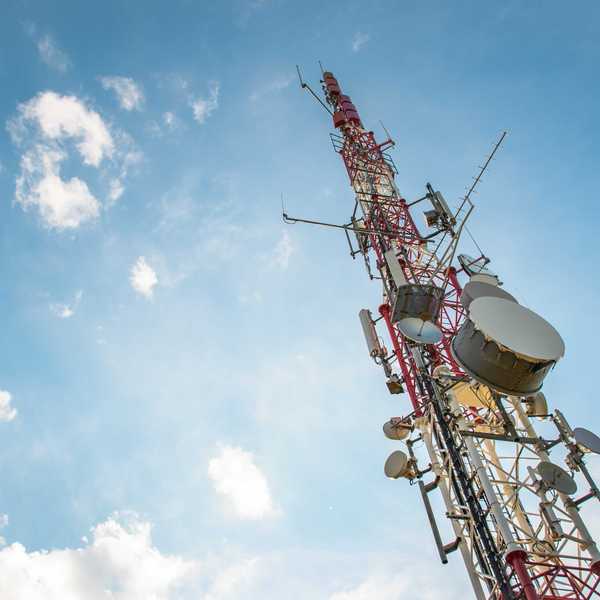

A new review paper published in Frontiers in Public Health details the outdated policies and gaps in oversight and enforcement that characterize the U.S.’ regulatory framework for cell towers, cell phones, Wi-Fi and wireless radiation. The author, Theodora Scarato, is the director of Environmental Health Sciences’ Wireless & EMF program.
In short:
- The FCC has regulatory authority over cell tower and wireless radiation limits in the U.S., but lacks in-house expertise on health and states it defers to other agencies such as the FDA, CDC, NIH or EPA. However, none of these agencies have reviewed the full body of scientific evidence and have conducted little to no meaningful oversight or health-risk evaluation.
- Human exposure limits for wireless radiation have not changed since 1996 and protect only against short-term heating effects, not the health impacts of long-term exposure.
- The FCC exemplifies regulatory capture through undue industry influence, with a decades-long revolving door between the agency and industry leadership. This paper documents how industry-funded research more often reports no effects from exposure.
- The U.S. lacks premarket safety testing, post-market health surveillance, compliance audits, exposure measurement and monitoring programs, and has no occupational health program in place to monitor modern workplace exposure and mitigate risk.
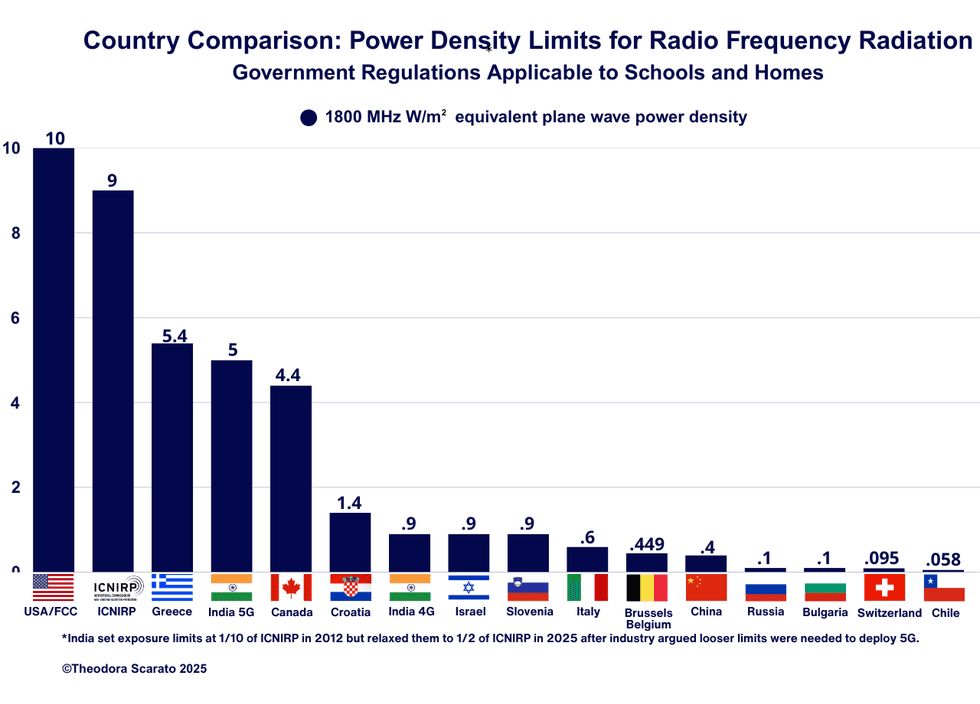
- U.S. limits for cell tower radiation are among the highest (most lenient) in the world, while many other countries have more robust measuring and oversight programs as well as specific safeguards for children, such as banning cell towers at schools.
Key quote:
“To rectify the current situation, government oversight must balance industry power. A strong regulatory framework must be built that rests on transparency and robust evidence-based evaluation, free of industry influence. Prevention is the cornerstone of public health, and the U.S. needs to move toward a risk mitigation approach.”
Why this matters:
Wireless exposure is increasing due to the rapid expansion of cell towers, 5G, and now 6G networks. Without transparent oversight, independent monitoring, or meaningful public disclosure, communities are unable to assess their real-world exposure or make informed decisions about infrastructure placed near homes, schools, and workplaces.
This paper documents how the issue is not only about the mounting scientific evidence on health risk, but whether 1996 regulations have kept pace with technological expansion, and how heavily today’s policy has been shaped by industry influence. Unlike other environmental pollutants, cell tower radiation is subject to minimal regulatory oversight. With federal proposals moving forward in 2026 to fast-track cell tower deployment, local communities may have little ability to influence where and how wireless infrastructure is built. The U.S. The Department of Health and Human Services stated that it will launch a study on cellphone radiation, building on Secretary Robert F. Kennedy Jr's concerns that cell phone radiation poses health risks such as neurological damage and cancer.
What you can do:
The paper concludes with a set of policy recommendations and can be downloaded and shared with local, state, and federal officials. The paper, along with our fact sheets, are key resources you can use to advocate for transparent oversight, updated health-based standards, and policies that prioritize public health over industry convenience.
 www.ehn.org
Related EHN coverage:
- Yale Study: Wireless radiation at Bluetooth exposure levels increased the expression of autism-related genes in laboratory models
- Wireless radiation exposure linked to DNA damage
- Cell tower radiation linked to higher reports of health issues, study finds
More resources:
- Regulatory Gaps in U.S. Wireless Radiation Policy: Public Health Implications and Recommendations for Reform
- Science on the health effects of wireless radiation
- Environmental Health Sciences' Wireless & EMF Program Resources
Scarato, Theodora for Frontiers in Public Health vol. 13. Dec 18, 2025
- Major WHO-backed study: high certainty that wireless radiation causes cancer in animals ›
- Cell phone radiation altered brain development in rodents, study finds ›
- What to know about cellphone radiation ›
- Cell phone use linked to an increased risk of prostate cancer ›
- Majority of studies report human health impacts from cell tower radiation exposure - EHN ›